
Following our coverage of the draft IR rules to verify sustainability, we explore the implications for intermediate crops.
-
Definition of main crop is to meet any one of the following, resulting in an intermediate crop being a crop that is not a main crop.It is the sole crop on the land for the entire seasonIt has the highest economic valueIt is present on the land on 31 May (NE) / 30 November (SE)*In multi-harvest areas, it is one of the two crops occupying the land longest.
-
Certification bodies and voluntary schemes must verify 5-part qualification to determine whether a feedstock qualifies as an intermediate crop:Qualifies as a crop but not a main crop.Is not already listed elsewhere in Annex 9A other than point (t)Is grown in a region where a short vegetation period limits food/feed crop production to one harvest.Does not trigger demand for additional landDoes not deplete soil organic matter
-
Auditors must also confirm:Single-harvest region: no combination of agricultural commodity crops (defined as wheat, corn, rice, barley, oats, sorghum, rye, soybeans, rapeseed, sunflower, lentils, chickpeas and dry beans) can produce more than one harvest per season due to the vegetation period, not water scarcity. This is a closed list not including likely intermediate crop species such as camelina. The test asks whether the listed commodity crops can double-crop, not whether the intermediate crop itself can. The FAO map on multiple cropping zones under rainfed conditions is cited as an acceptable data source. This would likely exclude large parts of Southern Europe and the Mediterranean basin (see map below).No additional land demand, through two cumulative conditions: Intermediate crop is not grown during a period when a main crop could have been grown, and its cultivation does not reduce the yield of the main crop.Soil organic matter: practices capable of maintaining or improving soil organic matter are applied (such as leaving crop residues on field, adding biochar (or compost/manure), applying low- or no-till systems.
-
A non-food cellulosic material exclusion acts as a gatekeeper provision. If an intermediate crop is mainly composed of cellulose and hemicellulose with lower lignin content, it doesn’t qualify as an intermediate crop at all, it gets reclassified as non-food cellulosic material. The definition of non-food cellulosic material explicitly excludes starch-rich, sugar, and oil crops, so oilseed intermediates like camelina are not caught by this provision.
-
Crucially, classification as 9A is determined at the point of final fuel production as a test of technical capability, not actual output. If the intermediate crop meets the technical specifications for SAF production, the resulting biofuel counts as 9A(t), otherwise it falls under 9B(f).
-
In practice, a HEFA unit processing camelina oil into HVO for example, would still yield 9A because the feedstock could have been converted into SAF (HEFA-SPK).
-
Consequently, nearly all oilseed-based intermediate crop volumes processed through HEFA-capable infrastructure will default to 9A.
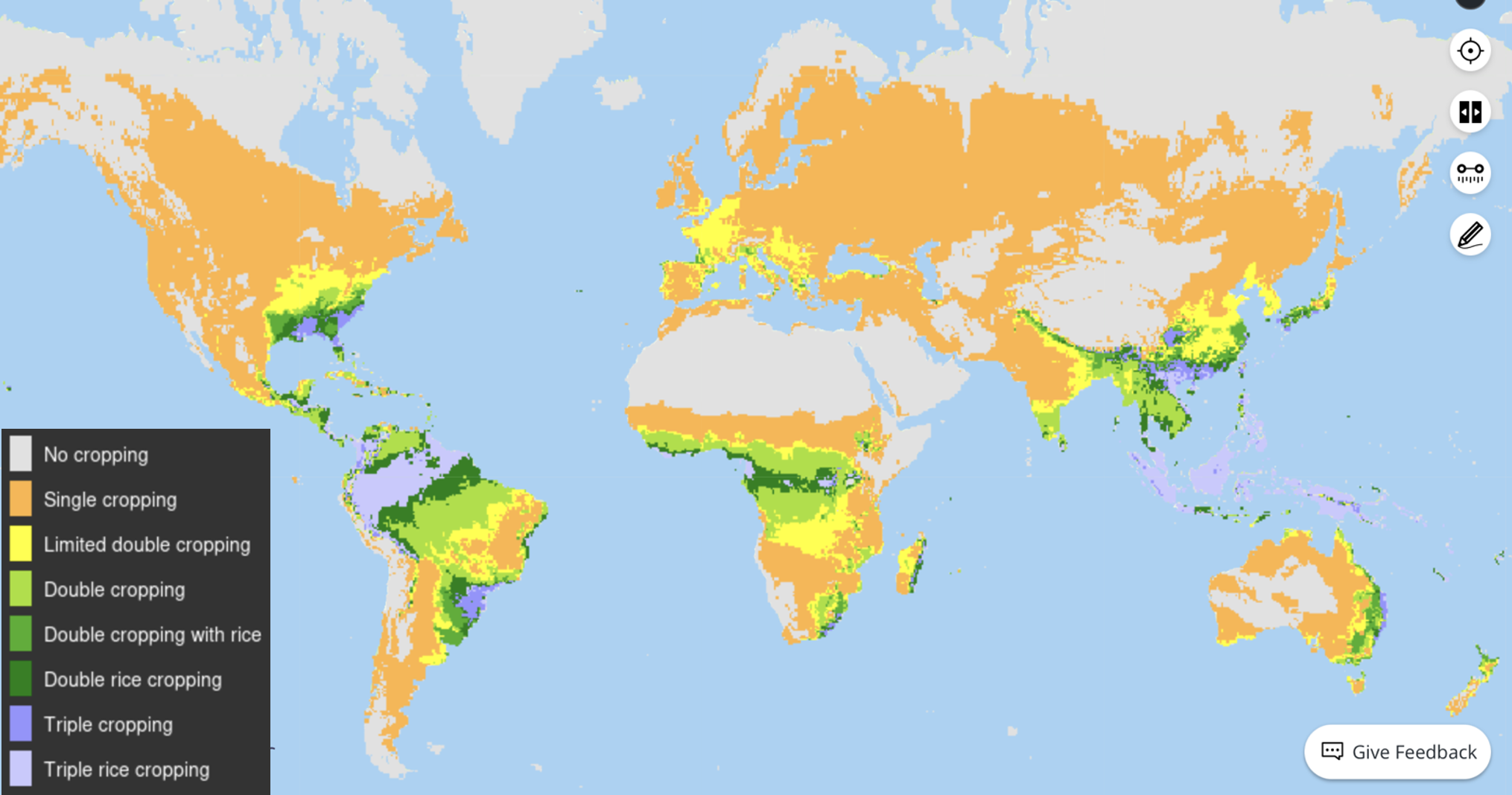
source: FAO
* document also points to 15 June / 15 November, an internal inconsistency to be resolved in the final text.
